Northern Vietnam is where first impressions are made, and they tend to be unforgettable. It’s a region of contrasts: poetic landscapes alongside buzzing streets, quiet mountains not far from urban frenzy.
Hanoi: Where It All Begins
Hanoi is less a city you simply visit and more one you learn to move with. In the Old Quarter’s 36 guild streets, daily life spills onto the pavements through coffee stools, street food stalls, and conversations that linger well into the day. Start the morning with a cup of egg coffee, then wander slowly, allowing the city to reveal itself along the way.
For many first-time visitors, one of the most memorable stops is Train Street, where daily life unfolds just inches from the tracks and the passing train creates a moment that feels both surreal and unmistakably Hanoi.
Traffic moves in every direction here too, and crossing the street can seem daunting at first. The trick is not to rush; walk steadily and let the flow move around you.
A fleeting moment on Hanoi’s Train Street, where cafés, lanterns, and daily life give way to the rhythm of a passing train.
Ha Long Bay, Lan Ha Bay or Cat Ba: Choose the Slow Route
Yes, Ha Long Bay is iconic. But the way you experience it matters.
First-time visitors often rush through on day trips. The better choice? An overnight cruise. As the crowds thin and the light softens, the bay reveals its quieter side. Alternatively, Lan Ha Bay or Cat Ba Island offer a slightly less crowded, equally stunning experience.
Cruising through Ha Long Bay, where limestone karsts rise from calm emerald waters dotted with traditional boats
Ninh Binh: An Easy, Worthwhile Escape
If you’re short on time but still want dramatic scenery, Ninh Binh is an excellent addition. It’s close to Hanoi, easy to reach, and far less hectic. Boat rides through caves and rice fields make it one of the most accessible nature experiences for first-time travellers.
A peaceful boat ride through Ninh Binh’s limestone karsts, where quiet waterways wind past towering cliffs and hidden temples
Sapa: Mountains, Mist & Quiet Luxury
Sapa feels like a different country altogether. Terraced rice fields ripple across the hills, and mornings arrive wrapped in mist.
For those less inclined to trek, the Fansipan cable car offers a surprisingly comfortable way to take in the views - the highest peak in Indochina.
Pair it with a boutique mountain stay, and Sapa becomes less about effort and more about atmosphere.
Ha Giang Loop: Adventure, Made Safer
You’ve probably seen the Ha Giang Loop online. But here’s what many first-timers don’t realise: riding it yourself requires a proper licence. That’s why the “Easy Rider” option is ideal. A local driver handles the roads while you take in the views safely and without stress.
Motorbikes wind through the dramatic curves of the Ha Giang Loop, surrounded by lush mountains and sweeping valley views
Mu Cang Chai: If Your Timing Is Right
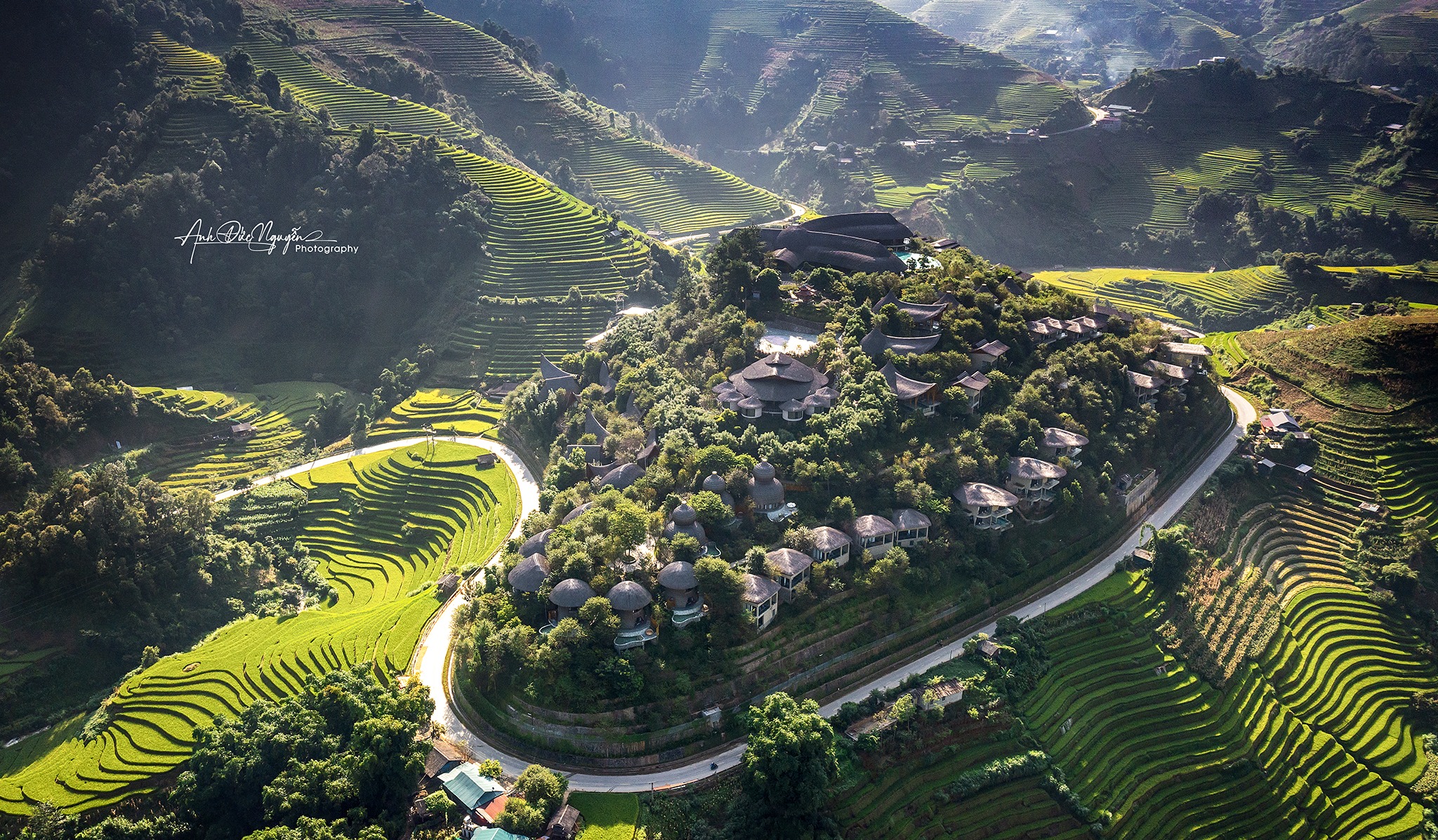
If you’re visiting in September or October, this is one of the best places to see in Vietnam. The rice terraces turn golden, and the scenery feels almost unreal. If not, it’s worth saving for another trip.
For a more immersive stay, Garrya Mu Cang Chai offers a serene retreat set among these centuries-old terraces, blending minimalist design with traditional Hmong cultural elements for a deeper connection to the landscape.
Garrya Mu Cang Chai
Best Time to Visit the North
- October to April: Cool, dry weather, which is ideal for cities and mountain regions
- September to October: Best for rice terraces in Sapa, Ha Giang, and Mu Cang Chai
How to Get Around the North
Skip the cramped buses. Opt instead for limousine vans or private cars as they are comfortable, efficient, and surprisingly accessible. It makes a noticeable difference, especially on longer journeys.