

Travel Experience at Cai Rong Port
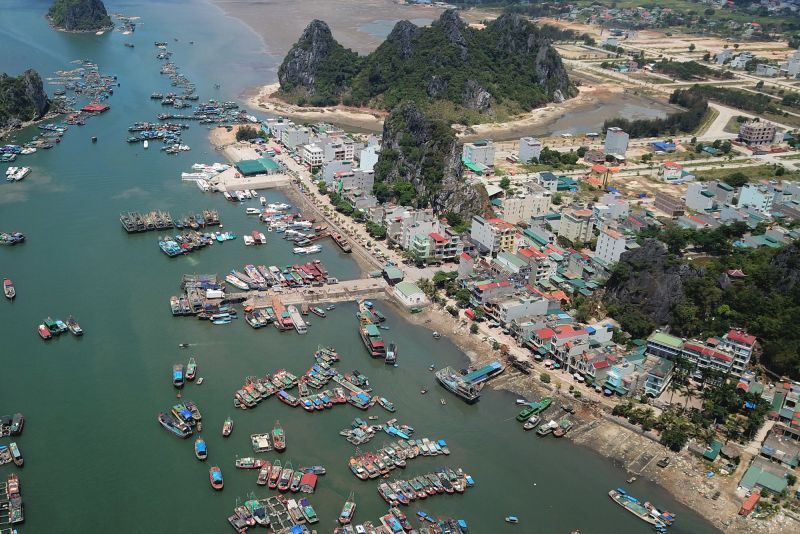
Are you planning a trip to paradise islands such as Quan Lan and Co To, departing from Van Don? Then you certainly should not miss this complete travel guide to Cai Rong Port — a vital gateway connecting the mainland with the stunning northeastern islands of Quang Ninh Province.
Cai Rong Port is not only a bustling transit hub but also the starting point for exploring the majestic Bai Tu Long Bay.
To ensure you have the smoothest and most fulfilling journey, this article compiles all the essential information — from transportation options and nearby attractions to must-try local delicacies and important travel tips.
Overview of Cai Rong Port
Cai Rong Port is located in Cai Rong Town, Van Don District, Quang Ninh Province. It is one of the busiest seaports in the region, playing a vital role in the economic and tourism development of the entire Northeast.
Following multiple rounds of investment and upgrades, the port now boasts modern infrastructure with large berths capable of receiving dozens of vessels daily — from traditional wooden boats to the latest high-speed ferries.
For travelers, Cai Rong Port is the ideal departure point for discovering the unspoiled beauty of well-known islands such as Quan Lan, Minh Chau, Ngoc Vung, and Co To. The lively atmosphere of boats arriving and departing, fishermen preparing for offshore trips, and excited tourists creates a vibrant, picturesque scene full of life.
How to Get to Cai Rong Port
By Coach/Limousine:
Several high-quality coach and limousine services operate the Hanoi–Van Don route, offering door-to-door pick-up and drop-off. Tickets range from VND 200,000–400,000 per person depending on the company and season. This is a popular choice due to its convenience and comfort compared to self-driving.
By Private Car/Taxi:
If traveling by car or taxi, take the Hanoi–Hai Phong–Ha Long–Van Don Expressway. Specifically, from Hanoi, cross Thanh Tri Bridge to join the Hanoi–Hai Phong Expressway, then continue onto the Ha Long–Van Don Expressway, and finally follow the provincial road to Cai Rong Port. The distance is around 250 km, taking 4–5 hours depending on traffic. Upon arrival, you can park at nearby lots before continuing to the islands.
By Motorbike:
The route is similar to cars, passing through Hai Phong and Ha Long. Adventure-seekers may enjoy riding a motorbike from Hanoi to Van Don. The scenery is beautiful, but ensure your bike is in good condition, carry all necessary documents, and pack basic repair tools. As the route is long, this option is best for experienced riders in good physical condition.
By Bus:
There is a bus route from Hanoi to Van Don, departing from My Dinh or Gia Lam bus stations. You can take Bus 01 (My Dinh – Ha Long) and transfer to the Ha Long – Cai Rong bus, with fares as low as VND 25,000. However, this method takes longer due to transfers.
Note: Before traveling, check traffic and weather conditions, and book bus or boat tickets in advance during peak seasons to avoid sold-out situations.
Unmissable Experiences Near Cai Rong Port
From Cai Rong Port, the pristine and majestic seascapes of Bai Tu Long Bay unfold before you. This is the perfect starting point to explore crystal-clear beaches, historical landmarks, and peaceful fishing villages.
Discover the Romantic Beauty of Quan Lan Beach
The beach captivates with silky white sand stretching alongside clear turquoise waters. Sheltered deep within the bay, the sea here is calm, the air fresh, making it perfect for swimming, kayaking, or simply strolling along the shore and watching the sunset.
Visit the Untouched Shores of Minh Chau Beach
Also located on Quan Lan Island, Minh Chau Beach is likened to a raw gem for its pure and tranquil beauty. The sand here is a soft pale gold, fine and smooth underfoot. The gentle, calm waters are framed by lush casuarina groves whispering in the sea breeze. Spacious and serene, Minh Chau is ideal for those seeking true relaxation — reading under the shade of trees and listening to the gentle sound of waves.
Check-in at Bai Dai Beach, Van Don
Bai Dai (“Long Beach”) is one of Van Don’s tourism treasures, located not far from Cai Rong Port. True to its name, this golden stretch of sand runs nearly 2 km along the curve of Bai Tu Long Bay. The scenery resembles a watercolor painting, with golden sands on one side and rugged mountains on the other.
The water here is clear with a gentle slope, safe even for children. A highlight is the wooden pier extending into the sea, a beloved photo spot for visitors.
Find Tranquility at Cai Bau Pagoda
Built on the foundations of an ancient temple from the Tran Dynasty, Cai Bau Pagoda showcases the traditional architecture of Vietnamese Buddhism. Visitors come here not only to pray but also to admire panoramic views of Bai Tu Long Bay from above and to find peace within.
Local Specialties to Try When Visiting Cai Rong Port
A trip to Cai Rong Port and its surrounding islands offers the chance to savor an array of fresh seafood and local delicacies:
-
Van Don Sandworms (Sá sùng):
A rare delicacy resembling earthworms, measuring 12–22 cm and living in coastal sandy areas. Fresh sandworms are cooked into various dishes like stir-fried with garlic, deep-fried, or in soup with betel leaves. The sandworms from Minh Chau and Quan Lan are particularly large and meaty. Dried sandworms retain their sweetness and can fetch VND 3.7–6 million/kg, often bought as a premium gift.
-
Van Don Hand-pounded Squid Cakes (Chả mực giã tay):
Made from fresh cuttlefish caught in the Hoang Sa–Truong Sa fishing grounds, pounded by hand in stone mortars for natural binding. Fried to a golden hue, they are chewy, fragrant, and typically enjoyed with sticky rice or steamed rice rolls. Luong Phuc brand (Dong Xa Commune) is especially popular.
-
Fresh & dried seafood:
With abundant marine resources, visitors should try local fish, shrimp, and squid fresh at restaurants or buy dried versions from markets.
-
Oyster Floss (Ruốc hàu):
Van Don is Quang Ninh’s “oyster capital,” producing up to 20,000 tons annually. The Bavabi brand’s oyster floss, rated a 5-star OCOP product, is mildly sweet, rich, and perfect with rice or sticky rice.
-
Cai Rong Fish Sauce:
Made from fresh anchovies and fermented traditionally without additives, this fish sauce is rich in protein and flavor, leaving a distinctive sweet aftertaste.
Travel Tips for Visiting Cai Rong Port
- Check boat tickets: Confirm departure times in advance to avoid missing your trip, especially during peak holidays. Large groups should pre-book tickets.
- Keep tickets safe: Retain your return tickets to present if requested by port authorities. Foreign travelers should carry passports.
- Choose the right vessel: Options range from high-speed ferries (faster, more expensive) to wooden boats (slower but cheaper and more atmospheric).
- Watch your belongings: The port can be crowded, so keep valuables close.
- Parking: Parking at the port is limited; nearby restaurants or hotels may offer parking for a small fee.
- Personal gear: Check the weather forecast; bring sun protection for sunny days and rain gear for light showers. Motion sickness tablets are advisable for those prone to seasickness.
- Prepare for sightseeing: Bring a camera, spare batteries or a power bank, and perhaps a selfie stick for group shots.
Luxury Stay at Angsana Quan Lan
Angsana Quan Lan is a 5-star island beachfront resort located in Son Hao Hamlet, Quan Lan Commune, Van Don District. Spanning 70 hectares, it is the first international-branded resort in Quang Ninh, offering 156 premium rooms and 40 ocean-view villas designed in harmony with nature.
Here, guests enjoy privacy and comfort infused with Vietnamese cultural charm, alongside modern facilities such as a mineral hot spring spa, indoor and outdoor swimming pools, and a kids’ club. The resort also features exquisite dining and a variety of recreational activities — from archery and cycling to kayaking.
Choosing Angsana Quan Lan means not only experiencing world-class hospitality but also fully immersing in the island’s pristine, tranquil beauty within a luxurious and refined setting.